May 20, 2026
Last week, I was chatting with a friend at a social event when the conversation turned to bar and bat mitzvahs at his synagogue. “You would not believe the way the girls dress…” he said, his voice trailing off.
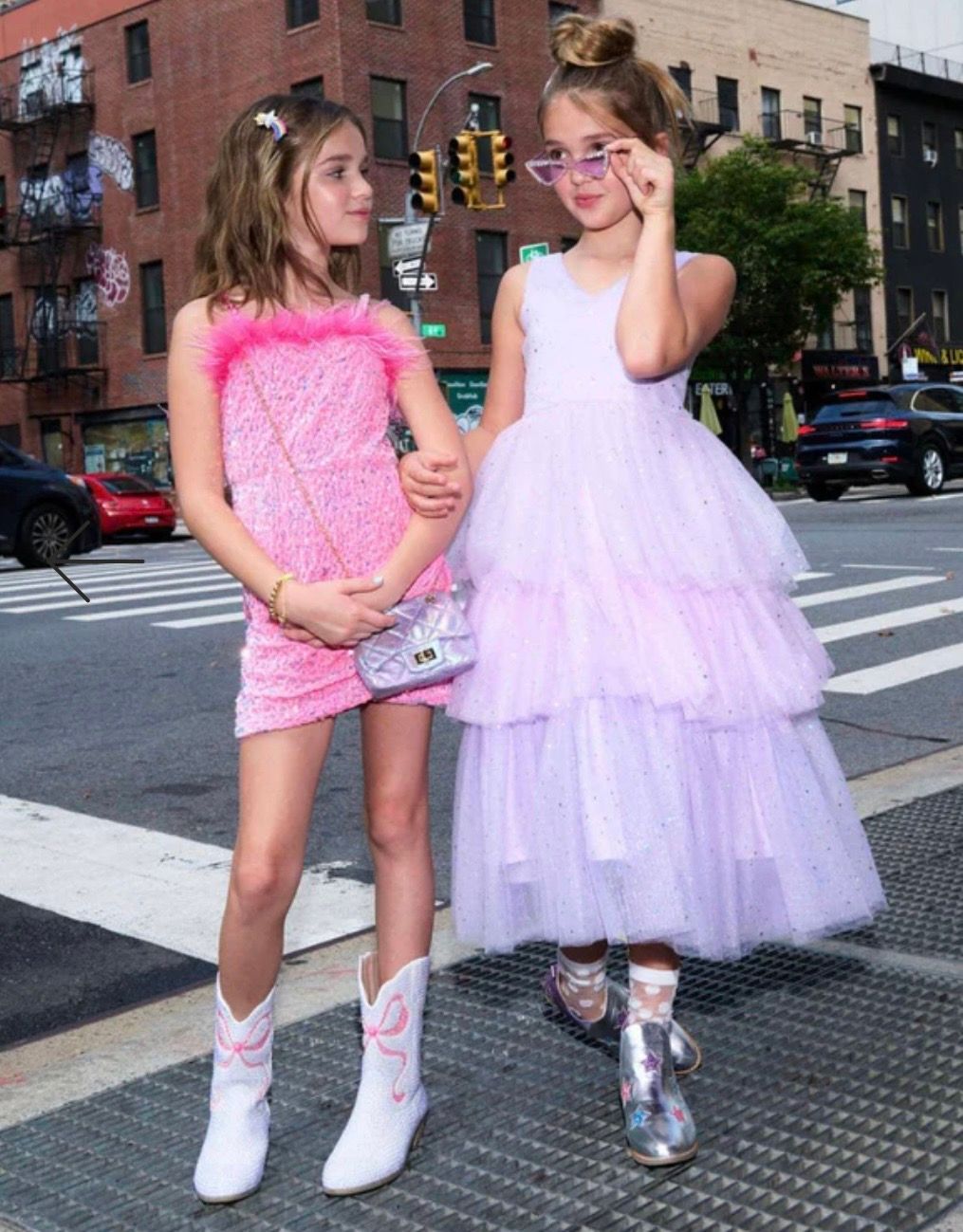
If you know anything about me, you know I hadn’t asked, and that I’m not sympathetic to adults who complain about girls wearing revealing outfits. This mindset leads to blaming girls who are harassed or assaulted for provoking their own victimization — everything I stand against. But I just wanted to chill out, and educating people about their benevolent sexism (the variety cloaked in protectionism) doesn’t make me friends. Reader, forgive me: I changed the topic.
A few days later, I went to the tailor to get my jeans hemmed, and I sat on the bench to wait my turn. A young girl emerged from the dressing room wearing a showstopping pink party dress — spaghetti straps, feathers, hem at mid-thigh, sparkly two-inch sandals. Her mom stood next to her, beaming. “It’s for her bat mitzvah,” she told me.
I tried to square my friend’s comment with the girl standing a few feet away from me. She looked sweet and adorable. Was that because she was white and thin and not yet developed? Because her mom was there, radiating pride? Or because she is a child?
And what if she had been an early developer wearing a bra? Curvy or larger? A girl of color? Wearing the exact same dress, would she cease being adorable and become provocative?
To some people, unfortunately, yes. Which proves the issue is never the outfit. It’s the person wearing it — her body and identity. And if the “problem” is a girl’s body and identity, then the answer is to train people to stop reading girls’ and women’s bodies as sexual by default. We need to teach people to look at a girl and see just that: a girl.
The loophole that lets predators off the hook
Now imagine feather-dress girl several years later, her Torah reading in her rearview mirror. She’s at a party. She drinks too much. Everything looks blurry. She’s stumbling, barely able to speak, but she’s not unconscious. Is she still sweet, adorable, innocent?
Not according to New York State law if she is the victim of a sexual assault. New York is one of roughly 20 states where it remains legal to have sex with someone who is too intoxicated to consent — as long as that person chose to drink.
Under the voluntary intoxication exclusion (also referred to as the "voluntary exclusion loophole"), a victim must prove she was “physically helpless,” meaning she was unconscious or so incapacitated she could not communicate refusal. For most intoxicated victims who are not completely unconscious, the law offers no reliable protection. It is a holdover from an earlier era, when victim-blaming had a legal stamp of approval, and it is long past time to eliminate it.

Studies show that about half of all sexual assaults involve alcohol or drug use by the victim, the perpetrator, or both — and among victims of alcohol- or drug-facilitated rape specifically, research finds that the overwhelming majority had consumed substances voluntarily rather than being covertly drugged. In other words, the loophole strips protection from the most common scenario. The Manhattan DA’s office rejects nearly half of all sexual assault cases. The leading reason is that the DA's office does not see intoxicated victims as credible. Consider Christina Maxwell, a Manhattan woman whose drink she believes was laced with GHB. Surveillance footage showed her collapsing and unable to remain upright, and a hair test confirmed the presence of the drug. She pressed charges, and the NYPD interviewed the suspect. No arrest was made because under New York law, her earlier voluntary drinking made the case nearly impossible to prosecute.
Even Texas — Texas! — closed this loophole last year. New York has not. The legislative session ends in two weeks. Time is running out. The single most important thing you can do right now if you live in New York State: call Assembly Speaker Carl Heastie’s office directly — at 518-455-3791 — and tell
him to bring this bill, known as A101A, to a vote before the session ends. He is the reason this bill keeps dying in the Assembly, year after year, despite passing through the state Senate. I promise you, calling the Speaker's office is not scary; the person who picks up the phone will just take down your message. If you want to go the extra mile, also contact your own Assembly member via nyassembly.gov. It takes two minutes and it can make a real difference.
Being terrorized shouldn’t depend on who’s doing the terrorizing
There is one more bill I need to tell you about, born of the same dismissal of women’s safety that runs through everything I’ve described above. New York is among a small handful of states that still deny stalking victims a civil path to protection. Right now, you can only get a civil order of protection if your stalker is someone you’re related to or have been intimate with. Criminal courts can issue orders of protection without that relationship requirement — but only when charges have already been filed, and filing charges is far from automatic, especially when the harassment happens online. If a neighbor, former colleague, client, fan, or stranger is making your life a nightmare, and that person hasn’t been arrested, you are on your own.
I know something about this firsthand. Years ago, a patient of my mother’s — someone I’d never met nor communicated with — became obsessed with me. She stalked me for several months. She knew where my kids went to school, and I had to print a photo of her I found online to give to the school administration. She showed up at a conference where I was speaking; another time, she tried to gain entry to my synagogue on Shabbat morning while I was there. She emailed me several times a week (I never responded). I was lucky: she eventually lost interest. Others are not so fortunate.
Stalking is not a nuisance. It is a form of violence that creates constant fear, destabilizes a person’s sense of safety, and can escalate. Three-quarters of intimate partner femicide victims were stalked before they were killed. Yet New York, a state that considers itself a leader on women’s rights, is among the worst in the nation in protecting stalking victims of any gender.
The CREEP Act (Ceasing Repeated and Extremely Egregious Predatory Behavior Act) would allow any New Yorker being stalked to seek a civil order of
protection, regardless of their relationship to the stalker and regardless of gender. Anyone, including yourself, your daughter, your son, your partner, or
your aging parent could use this law.
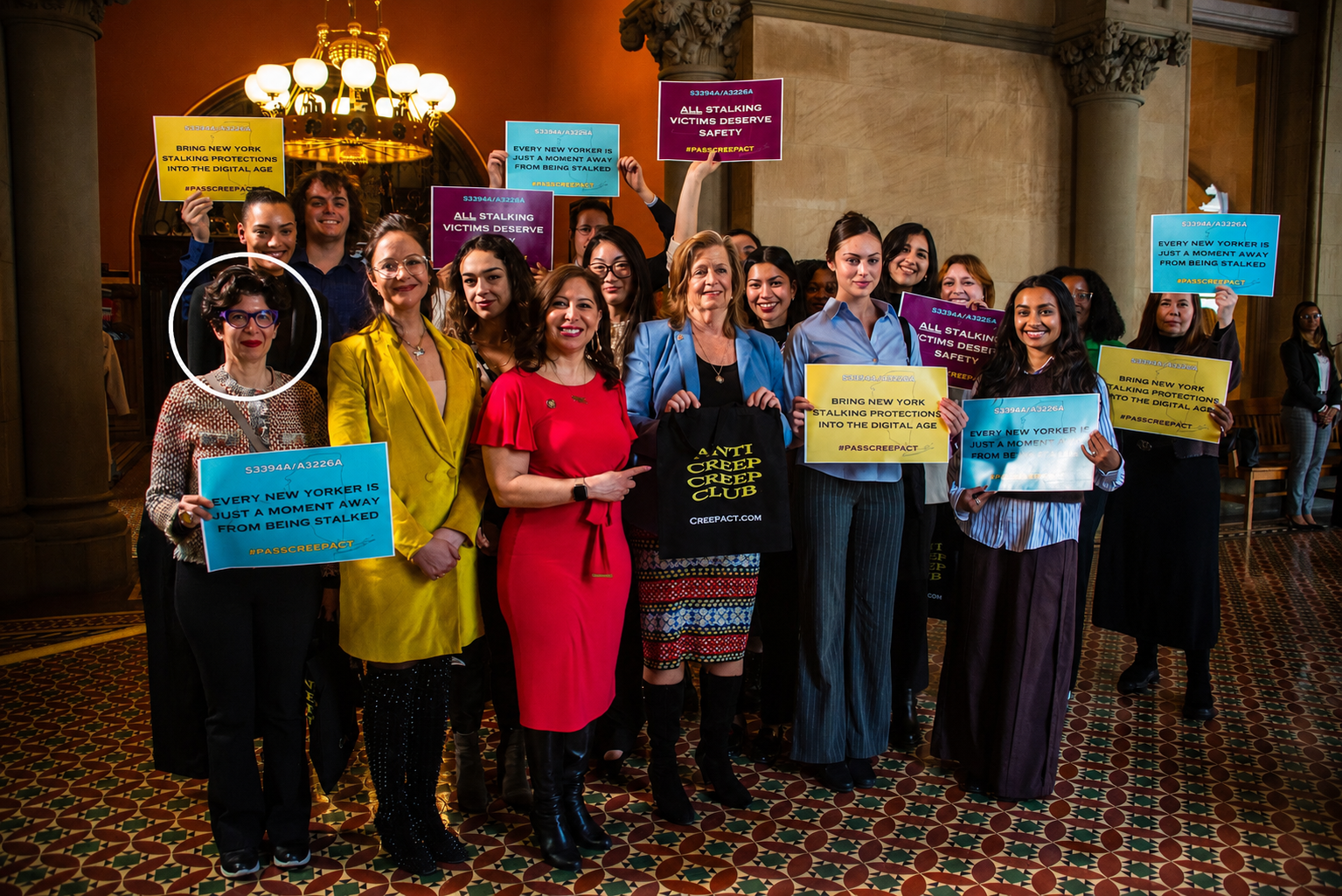
It updates our protections for how stalking actually operates in 2026 — through social media, location tracking, deepfakes, and electronic harassment that follows people into their own homes. The bill passed the state Senate unanimously in a bipartisan vote and now awaits action in the Assembly, where it has cosponsors from both parties.
Two bills, one bottleneck. Assembly Speaker Carl Heastie’s office number is 518-455-3791. Call and tell his staff you want both the voluntary intoxication bill (A101A) and the CREEP Act (A3226A) brought to a vote before the session ends in early June. Visit CreepAct.com for a pre-written message that takes under a minute to send, or call and say simply: “I support the CREEP Act and I want you to bring it to a vote.” It will take you less time than it took you to read this newsletter.
Slut-shaming isn't just cultural. It is written into law.
Listen: it doesn’t matter what the victim was wearing, how much she was drinking, what her behavior was, or whom she knows. None of that is relevant. The problem is the predator and the laws that protect him. For New Yorkers, the window to change two of those laws is closing fast. Please act now.
And for everyone else, find out where your state stands. RAINN maintains a state-by-state breakdown of sexual assault laws at rainn.org/state-law. Chances are good that your legislators need to hear from you too.