Slut-shaming matters because when people are dismissed as sluts, hoes, bops, and thots, they are denied care and compassion as human beings and in a variety of situations, including when they are sexually harassed, sexually assaulted, victimized by image-based sexual abuse ("revenge porn" and "deepfakes"), and need an abortion.
They've been calling it a dirty word
The Latest on Slut-Shaming + Bodily Autonomy
June 22, 2026
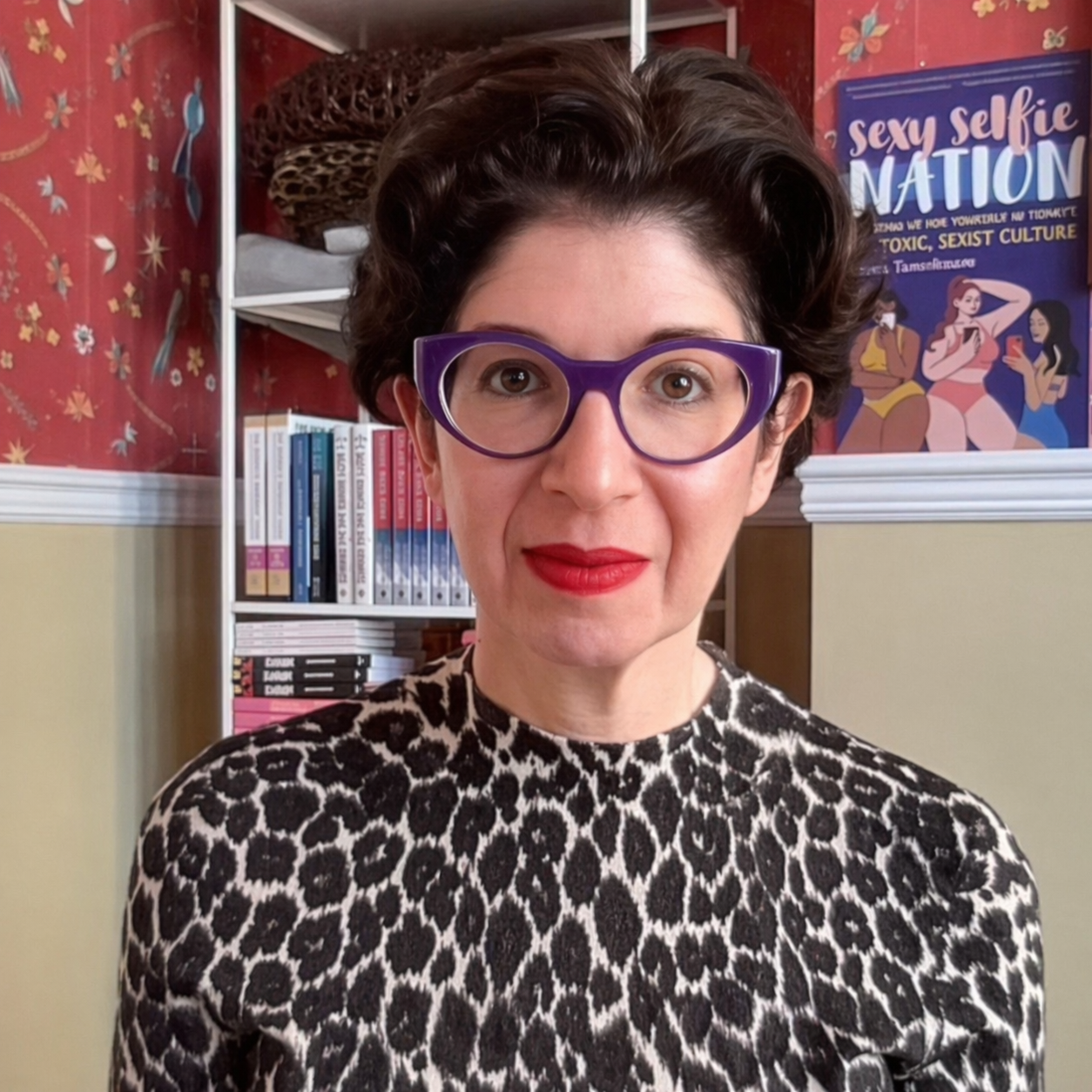
"Intersectionality" has been turned into a political insult.
Here’s what it actually means.
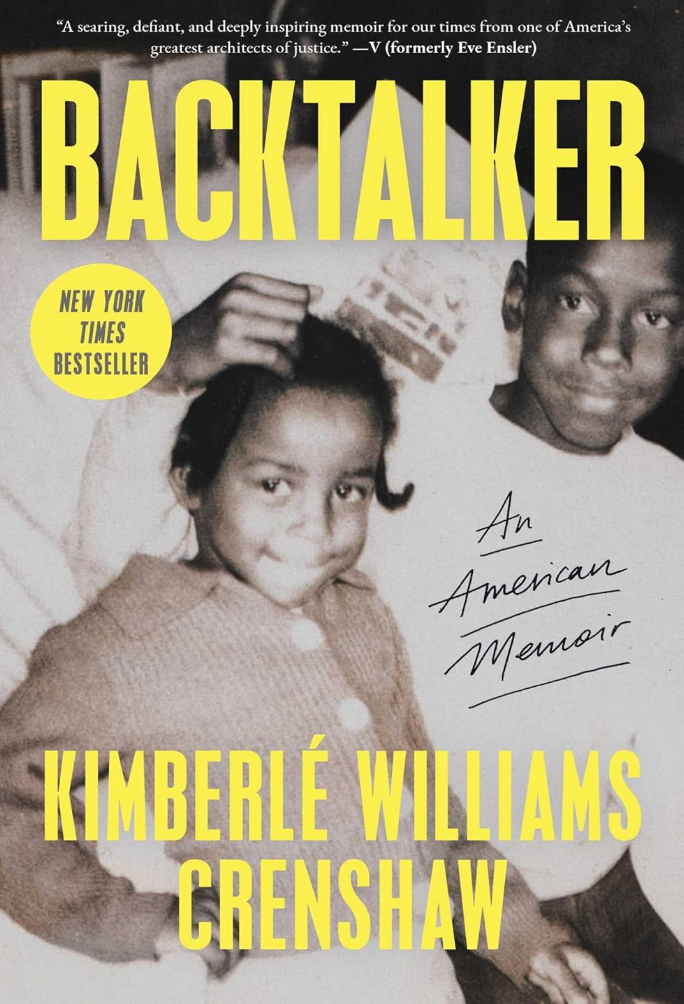
I just finished reading Backtalker, the memoir of law professor Kimberlé Crenshaw, who famously coined the term “intersectionality.” (Crenshaw also has been a leader in the legal movement known as “critical race theory.”) Introduced in a 1989 law journal article, the word "intersectionality" has become a phenomenon: printed on T-shirts and coffee mugs, debated in Congress, and sneered at by our elected officials. But somewhere along the way, the word lost its meaning. It began as a precise legal idea, and it has been deliberately blurred into a culture-war insult.
I loved Backtalker on two levels — as the fast-paced story of a brilliant mind, and as the origin story of the word “intersectionality” itself — and I recommend it to anyone who enjoys a cerebral memoir. If you don’t have time for the book right now, here’s an explainer on what intersectionality means. I've supplemented examples from the book with stories from the headlines, as well as my analysis of who benefits from the confusion.
Wassily Kandinsky, "Circles Within a Circle." 1923.
What intersectionality means.
Crenshaw coined “intersectionality” as a legal and analytical tool to describe how different forms of discrimination (race, sex, class) overlap and compound one another, creating unique burdens for people who belong to more than one marginalized group. It was meant as a framework for making discrimination law more precise and honest. Its key insight is that different forms of discrimination, particularly race and sex, do not operate independently. Crenshaw named the idea and gave it legal teeth, but it grew from a longer Black feminist tradition, including the Combahee River Collective’s account of the “interlocking” systems that shape Black women’s lives.
If a law protects only “women” (meaning, in practice, White women) and another protects only “Black people” (meaning, in practice, Black men), Black women fall through the cracks of both. The case at the heart of the concept is from 1976. Emma DeGraffenreid, a Black woman laid off from General Motors, sued under Title VII of the Civil Rights Act of 1964 — the part of the law banning job discrimination — which bars discrimination based on both race and sex. (The law’s word is “sex”; in everyday life we’d say gender.) A federal judge refused to let her combine the two claims, ruling that the law did not recognize being a Black woman as its own distinct category of discrimination, separate from what either Black people or women face on their own.
Crenshaw used this case in her 1989 article “Demarginalizing the Intersection of Race and Sex” to argue that Black women face a distinct form of discrimination — one that is invisible to courts and movements that treat race and sex as separate categories.
Why intersectionality matters.
As someone focused on bias and discrimination against women, I find an intersectional approach indispensable. Take the way girls and women are derided as sluts. The “slut” slur is never applied to a neutral, generic woman; it is always shaped by race, ethnicity, class, sexuality, religion, ability, and age. There is no universal meaning of sluttiness: the same slur carries different consequences depending on who is targeted and by which institution — a Black teenager disciplined at school, a Latina written up at work, a White woman in her twenties gossiped about at a party. Only an intersectional approach can help us understand why the same insult lands differently for different people.
Three real-life examples.
Crenshaw recounts a formative experience when she was a student at Harvard Law School. She and a Black male classmate, Reese, were invited into the Fly Club — a prestigious and exclusive Harvard final club — by the club’s first Black member, Ben. Crenshaw and Reese steeled themselves for racist treatment and agreed they wouldn’t put up with any whiff of it.
When they arrived, Reese was welcomed through the front door, but Crenshaw was told she had to enter from the back — because she was a woman. She writes:
“In my mind, whether my backdoor treatment was because I was a woman or because I was a Black person made no difference in our mutual defense pact, but for Reese, solidarity applied only to things that were going to affect us both in the same way. Presumably, racial exclusion of both of us fit the bill, but the gender exclusion of me did not.
“Worse still, Reese and Ben plainly expected me not to make a scene. I stood momentarily frozen, both by the realization that they would not stand up for me to be treated as their equal and by my own fear that they would judge me harshly for insisting that they do. Their plea for me to behave reflected a familiar expectation: to pledge allegiance to a flag of solidarity that didn’t pledge the same to me.”
This episode shows why single-axis thinking — solidarity organized around either race or gender, but never both at once — leaves Black women unprotected. Reese’s anti-racist pact only covered the discrimination they would face together as Black people. The moment Crenshaw was singled out as a woman, she became invisible to the very ally who had just pledged to stand beside her. Intersectional thinking would have demanded that Reese see her gender exclusion not as a lesser, separate grievance but as inseparable from the racial justice they had both come to defend. For a Black woman, there is no clean line where race ends and gender begins.
The second example was a crystallizing moment for Crenshaw: the Anita Hill testimony. In October 1991, law professor Anita Hill testified before the all-male Senate Judiciary Committee, in nationally televised hearings, that Clarence Thomas — President George H. W. Bush’s Supreme Court nominee — had repeatedly subjected her to graphic sexual comments and unwanted advances while he was her supervisor at the Equal Employment Opportunity Commission in the early 1980s. The Senate confirmed Thomas anyway, 52–48.
Hill occupied an impossible position. As a Black woman accusing a Black man of sexual harassment, she was abandoned by both feminists and Black civil-rights activists, even though both movements should have stood with her. The mainstream feminist movement was slow to defend her because it struggled to make a Black woman the face of sexual harassment. Meanwhile, much of the Black community rallied around Thomas, framing his confirmation as a story of racial persecution — which meant Hill’s credibility as a woman was sacrificed to protect a man’s standing as a Black person. As Crenshaw writes:
“For me, the erasure of Black women as both targets of sexual harassment and as agents in challenging it was a predictable consequence of a feminism that struggled to address racism, and an anti-racism that struggled to acknowledge sexism.”
An intersectional lens was missing. It would have revealed that Hill wasn’t experiencing racism or sexism, but a specific injury that arose from being both Black and a woman at once — leaving her with no constituency fully willing to stand in her corner.
My third example doesn’t appear in Backtalker, but it may be the most familiar because it is recent: the ouster of Dr. Claudine Gay. In late 2023, Gay, Harvard’s first Black woman president, came under fire for her responses in a congressional hearing about campus antisemitism after the October 7 Hamas attack on Israel. When asked directly whether calling for the genocide of Jews would violate Harvard's conduct policies, Gay gave a legalistic, hedging answer, saying it "depends on the context." Many people condemned her testimony as evasive and tone-deaf.
I too was disturbed by Gay's testimony. Protecting free expression did not require her to treat a call for the genocide of any people as just another viewpoint. Gay did state that she found calls for the genocide of Jewish people personally "abhorrent" and "at odds with the values of Harvard." But she also focused on a conduct-code technicality when she should have offered moral clarity. At the same time, I watched Rep. Elise Stefanik corner Gay in a high-pressure environment with leading questions engineered to produce a damaging soundbite.
But before reasonable people could assess Gay's blunder, conservative activists lobbed her with plagiarism allegations. On this front, she was held to a standard of scrutiny that no previous Harvard president, all of them White (and all but one of them men), had ever faced. Her credentials were dismissed, and her race and gender were treated as proof that she could not possibly have earned her job on merit. She resigned in January 2024.
Gay was defended by Black scholars, civil-rights leaders, and hundreds of faculty members — yet that support couldn't withstand a campaign that attacked her from two directions. Harvard's own review found citation lapses rather than research misconduct; the plagiarism charge was disproportionate.
An intersectional defense would have held two truths at once: that the citation questions were real, and that the ferocity around them was about who she was, not what she did.
Wassily Kandinsky, "Color Study: Squares with Concentric Circles." 1913.
How the political right maligns intersectionality.
The political right, especially in the Trump administration, distorts intersectionality as part of its effort to roll back anti-discrimination protections. The distortion works in three ways.
First, they invert it. Crenshaw’s argument was that Black women were invisible to both civil-rights law and the feminist movement — not that they deserved special status. The right rewrites this as a “hierarchy of oppression” that ranks people and sticks White, straight men at the bottom, and then as outright “reverse racism.” By casting anti-discrimination as anti-White, they get to paint its defenders as the real bigots — and make the whole idea easy to dismiss.
Second, they blur it. Rather than engage with what intersectionality actually is about, they lump it together with “woke,” “critical race theory,” “DEI,” and “gender ideology” — a single undifferentiated threat. Crenshaw’s specific, court-tested argument about discrimination law disappears into a vague culture-war symbol that is easy to mock and impossible to pin down.
Third, they ban it. Executive orders and state legislation now withhold funding from schools that so much as teach the concept, punishing institutions for nothing more than discussing it.
A term coined specifically to help Black women win equal treatment under anti-discrimination law has been transformed, in the right-wing imagination, into a symbol of radical, anti-White, anti-merit social engineering.
Why we should embrace it.
The sharpest objection comes from cultural critic Kelefa Sanneh, writing in The New Yorker: “Intersectionality is, by design, a divisive creed, and once we start dividing there is no telling where we will stop.” Coalitions, after all, are built on what people share, not on what separates them.
But this mistakes description for prescription. Intersectionality doesn’t invent divisions; it names the ones already there: the cracks Emma DeGraffenreid fell through, the corner no one stood in for Anita Hill. You cannot build a coalition that truly holds Black women if you refuse to see how their experience differs from both White women’s and Black men’s. Naming who is being left out isn’t what fractures a movement; pretending everyone is excluded in the same way is.
Used with empathy and a real appetite for alliance, an intersectional approach is the opposite of divisive. It is how we make the “we” truly inclusive. It helps us see who is being left out, so that we can level the playing field for all.
Has this ever happened to you?
You were treated unfairly — or were not seen — because of two parts of your identity. Maybe it was your age and your gender. Your religion
and your accent. Your race and your class. (I've written about facing antisemitism and misogyny together and even coined a new word to describe this phenomenon.)
Whatever the combination, two parts of who you are were involved at the same time.
If a moment like that comes to mind,
email me and tell me about it. I'll share some of these stories, anonymously, in a future essay.