Slut-shaming matters because when people are dismissed as sluts, hoes, and thots, they are denied care and compassion as human beings and in a variety of situations, including when they are sexually harassed, sexually assaulted, victimized by image-based sexual abuse ("revenge porn" and "deepfakes"), and need an abortion.
The Carolyn Bessette problem
The Latest on Slut-Shaming + Bodily Autonomy
February 24, 2026

She wasn't a gold-digger. She was a woman.
The Hulu miniseries Love Story: John F. Kennedy Jr. and Carolyn Bessette is generating nostalgic frenzy, and I admit that I'm caught up in it myself. I lived in New York City in the 1990s: peak John-John era for New Yorkers. I had just graduated from the same college Kennedy attended, though we didn't overlap. He was often spotted biking around the city and seemed as normal as a person could be who was voted Sexiest Man Alive. He had finally passed the bar exam and, after being seen out and about with Madonna and various downtown Manhattan celebrity types, was now in a relationship with Daryl Hannah, whom I thought was brilliant in the 1984 movie Splash.
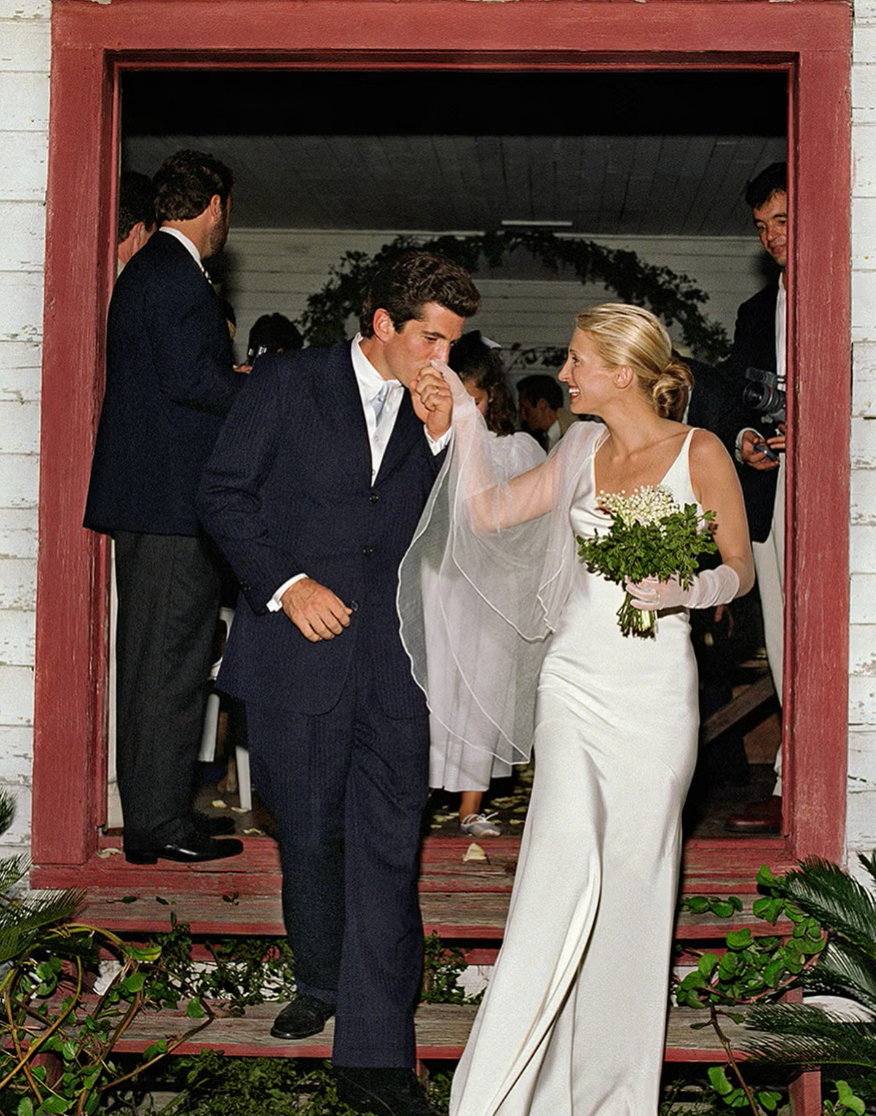
A colleague at my first post-college job mentioned to me offhandedly one day that she had also dated him. Whoa. I played it cool and didn't ask her, "What was he like?" or "Why did you break up?" or "Did you meet his sister or mother?" Pretending to be sophisticated, I acted as though her revelation didn't faze me because I knew from glamorous people, too. As if.
So when the relationship with Hannah ended and Kennedy dated Carolyn Bessette, I was voracious for the paparazzi photos and updates on their relationship. I remember two reactions to the gossipy revelations. My first reaction: I was bummed that my colleague wasn't the one being chased by photographers because, putting aside how threatening that experience surely must have been for Bessette, also, how cool would that have been?
Then there was the 1996 profile of Bessette in New York Magazine that ran a few weeks after Bessette and Kennedy married. (I never missed an issue, especially since my boss's husband was Clay Felker, the man who invented the magazine, though Rupert Murdoch had long since pushed him out.) I was deep in the early research that would eventually become my book Slut!, published three years later. Already steeped in the mechanics of how women get sorted into good and bad categories, I recognized what was at play when I read the profile: a sort of reverse-slut-shaming of Bessette.
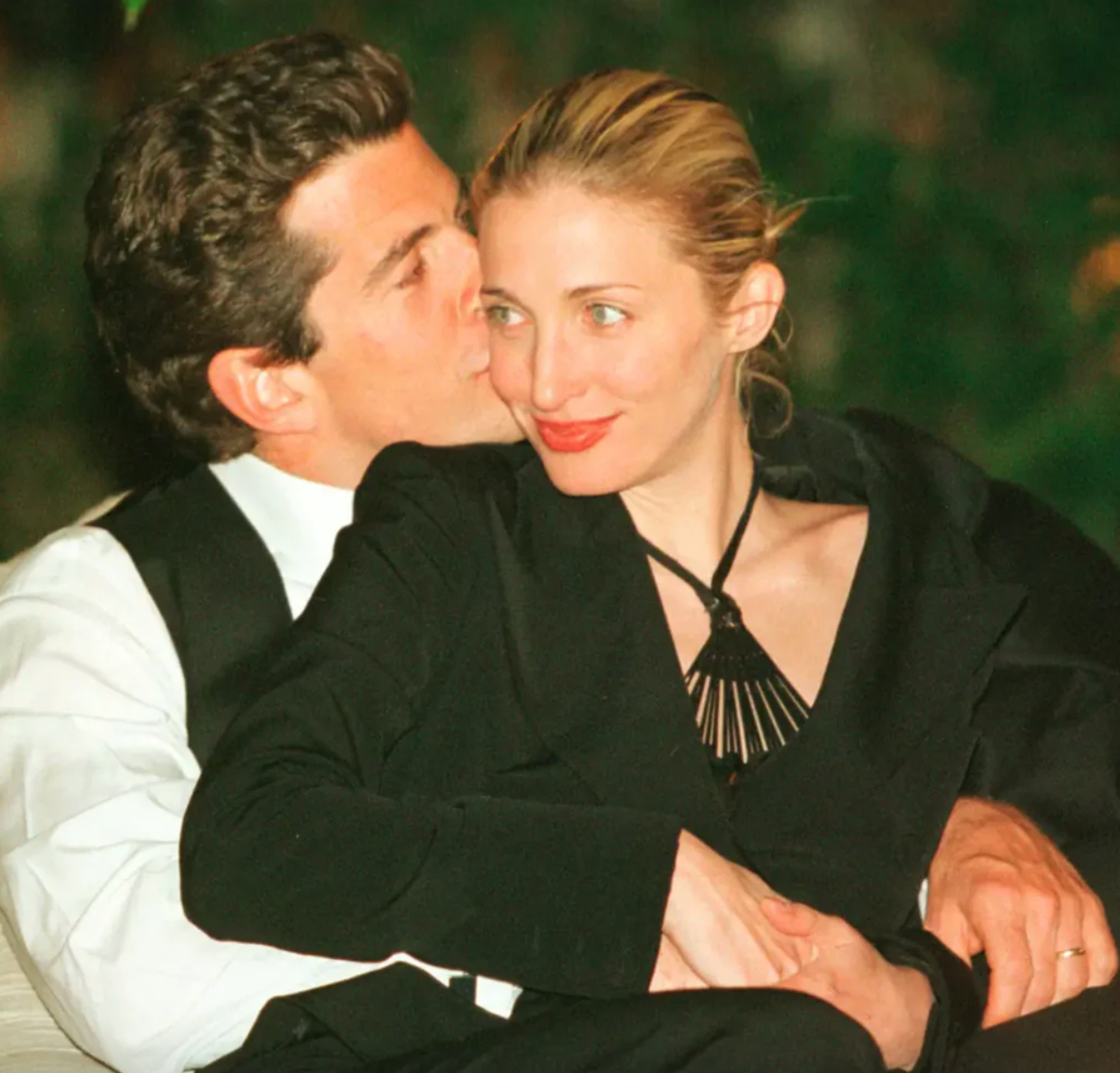
Capitalizing on the Hulu miniseries, which begins with the couple's tragic 1999 deaths and then rewinds to their courtship, New York has republished the profile, written by Rebecca Mead, among the sharpest cultural observers writing for the magazine at the time. That's what makes the profile so instructive. A smart writer reproduced, seemingly without examination, sexist cultural assumptions about beautiful, heterosexual women in the dating scene. Rereading it today, I’m appalled by the ways many people then and now falsely imagine the power held by women, a misreading that would be laughable if it did not support a desire to keep women in their place.
Assumption 1: The smart ones hide their gold-digging ways
Read the article closely, and a portrait emerges: Bessette as genius gold-digger. Mead never used the term, of course. She didn't have to. The profile did the work through admiration. To be fair, Mead mostly repeated what her sources told her. She lauded Bessette for not seeming desperate. The implication was clear: Bessette knew what she was doing, and she hid her maneuvers brilliantly. The Hulu miniseries follows the same playbook, positioning her as a foil to the apparently fictionalized version of an attention-hungry Daryl Hannah.
The article's central argument, dressed up in fawning prose with quotes from mostly unnamed sources, was that Bessette landed Kennedy through strategic feminine manipulation. She was, in the magazine's framing, a kind of sorceress of seduction — "hypnotically attractive" according to an acquaintance, impossible to pin down, expert at making powerful men feel special while keeping them just off-balance enough to stay hooked.
Here's what Mead didn't say because she didn't have to: Bessette was white, tall, thin, and blonde. Her appearance was a prerequisite. Scan the article and you won't find a single woman of color in Kennedy's orbit, not because Mead invented that absence, but because Kennedy's documented social world was overwhelmingly white.
One source (“someone who knows her”) described her as possessing "a remarkable ability to find what it is in people that allows them to be seduced," adding, chillingly, that "she clearly knows how to find your weakness very quickly, and in a kind of scary way." A friend of Kennedy told Mead, "She knows where all the levers are, and she is very deft in her operation of them." Bessette came across as a calculated husband hunter with an almost supernatural gift. The article invoked The Rules — the infamous 1995 how-to guide for catching a husband — as a frame for understanding Bessette's behavior.
She didn't fall in love; she executed a campaign.
The piece reveals, accidentally, the impossible bind women were caught in then and still are now. The article bent over backward to distinguish Bessette from lesser women — those who, dazzled by Kennedy, "just can't talk one way or another around him," according to a friend of both bride and groom. Bessette, by contrast, "is very strong-minded and very decisive." In a man, these qualities (decisiveness, the ability to hold one's own) read as strength. In a woman, they are understood as manipulation.
Notice the assumption that a woman must be magnetic and smart to land a man — but that those same qualities make her dangerous.
Assumption 2: Gold-diggers are basically sluts in disguise
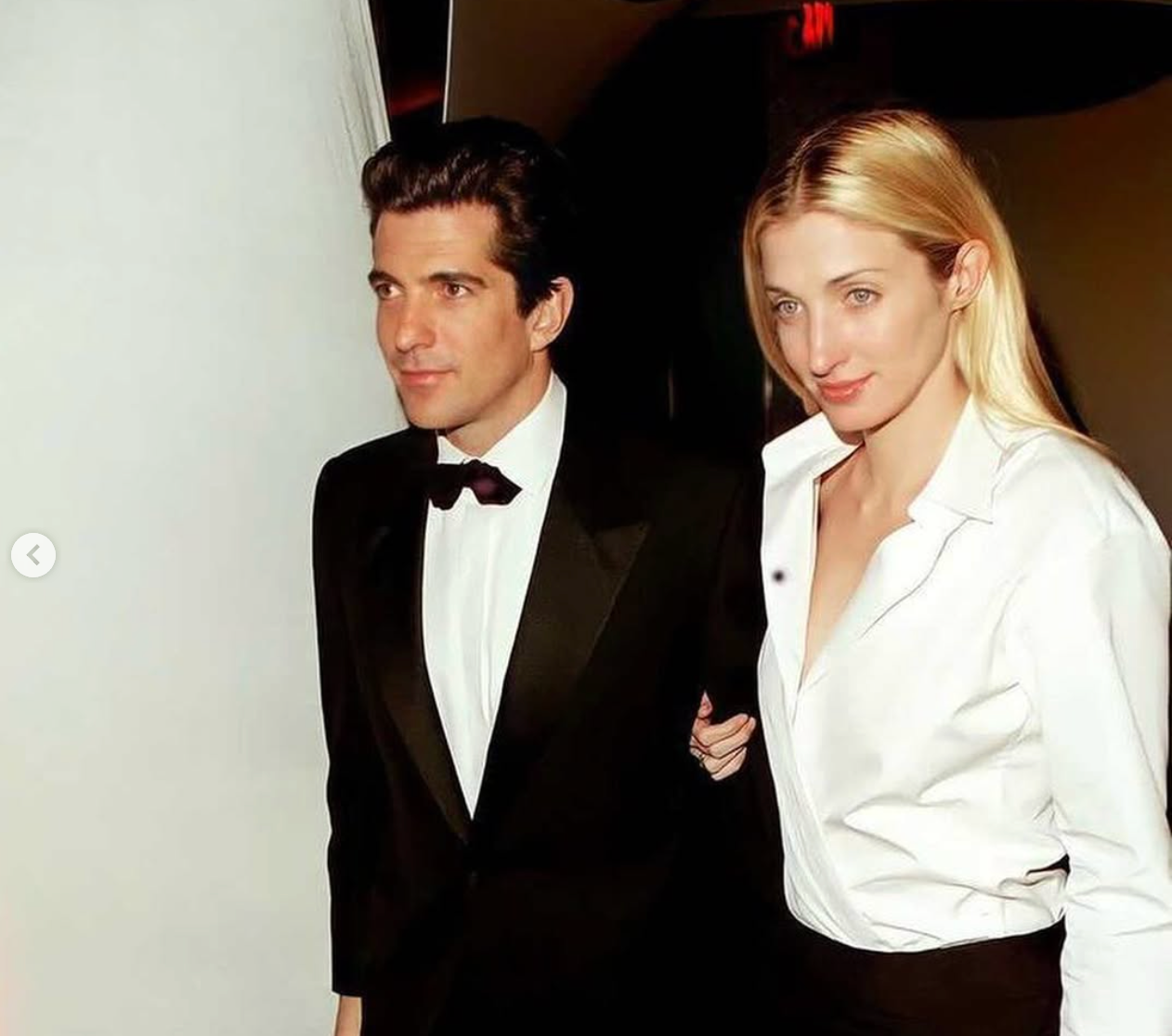
The insidious secondary message is that there is no “good woman.” There is only a woman who is better at performing goodness than you are. Bessette "knew how to disappear; she knew how to drive him nuts,” said “one person in the couple’s orbit.” When he seemed less than committed, she went off with other men to play on his ego. In the words of “an observer,” she was "cunning that way."
Bessette performed femininity perfectly. She made herself physically appealing and played hard to get. Equally important, she made her performance look effortless and uncontrived. By portraying her as a woman who held all the cards and operated them with cool precision, the article obscured the actual power dynamics at play. This article positioned Bessette as the one with power; she was a seductress who had cracked the code and figured out how to wrap Kennedy around her finger.
But who actually held structural power in this relationship? The sources in the Mead article suggested Bessette was genuinely formidable. Fine. But Kennedy was still one of the most famous, wealthy, and obsessed-over men in the country. He could, as one source noted, “basically order it up.” The portrayal of Bessette as a powerful schemer is a sexist fantasy.
Other women, according to Mead’s sources, were less "cunning," less "deft," less able to perform effortless femininity. Bessette was attractive to Kennedy, according to Mead, because she was excellent at making him feel like he was the one doing the choosing. A woman who fails to hide her efforts, who comes across as seeking attention, whose blouse is cut a tad too low and whose hem is a touch too high, is a member of a lesser class.
This is also, of course, a story about social class and power. The article's breathless admiration for Bessette's ascent from Calvin Klein salesgirl to "most sought-after woman in America" (in Mead’s words) implied that she was always climbing, always angling. Her career at the fashion house, her famous instinct for personal style, and her sharp opinions during fittings were all filtered through the lens of her ultimate prize: the Kennedy ring.
The double bind I've been describing — perform femininity badly and you're judged; perform femininity well and you're judged — is essentially a white woman's problem, and a privileged one at that. Women of color, and Black women in particular, aren't even invited to the same audition. The stereotypes they're handed have nothing to do with whether they played hard to get or hid their ambition well enough. They're structural, not behavioral. You can't perform your way out of them. I've spent three decades researching and writing about slut-shaming, and the through-line I've observed is that the system punishes all women, but it does not punish them all with the same ferocity.
The real harm of this framing isn't just to Carolyn Bessette's legacy. It is to all women. When women are presumed schemers and manipulators, feminine performance becomes a trap: do it well and you're calculating; do it badly and you're a slut. Every version of womanhood is suspect.
In this telling, men are victims of women who are puppet masters. With New York republishing the article as a companion to a prestige streaming series, it’s still the same story. I was voracious for it in 1996, but now I know it’s a lie. Why do we keep repeating it?